How an Automated Leave Management System Simplifies HR Work
As organizations scale, HR teams face increasing pressure to manage operations efficiently while maintaining a positive employee experience. One of the most time-consuming responsibilities is leave management. What starts as a simple spreadsheet often turns into a complex system of emails, approvals, corrections, and follow-ups.
This is where an automated leave management system plays a crucial role in simplifying HR work.
Automation Eliminates Manual Admin Tasks
Traditional leave tracking involves multiple manual steps:
-
Employees email leave requests
-
HR updates spreadsheets
-
Managers approve via email
-
HR reconciles records during payroll
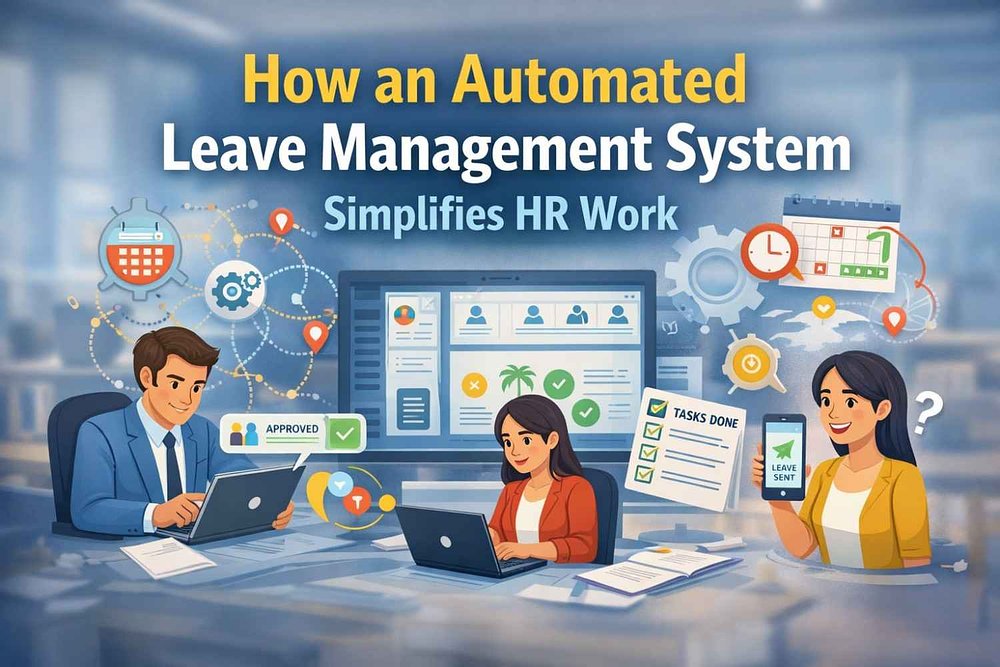
Automation replaces this entire workflow with a centralized system. Employees apply for leave digitally, managers approve it in real time, and records update automatically. HR no longer needs to act as a middleman for routine leave requests.
This saves hours of administrative effort each week.
Centralized Data Improves Accuracy and Transparency
An automated system maintains a single source of truth for:
-
Leave balances
-
Leave history
-
Policy rules
-
Approval status
HR teams no longer worry about outdated files or conflicting information. Employees can check their balances independently, reducing unnecessary queries. Managers can view team availability instantly, making better planning decisions.
Transparency improves trust across the organization while significantly reducing HR workload.
Faster Approvals Keep Workflows Moving
Automated leave systems notify managers instantly when a request is submitted. Approvals can be done from any device, ensuring there are no delays due to missed emails or unavailable approvers.
This leads to:
-
Quicker decision-making
-
Reduced follow-ups
-
Improved employee satisfaction
HR teams benefit by spending less time chasing approvals and more time on strategic initiatives.
Built-In Policy Enforcement Reduces Errors
Leave policies can be complex—different accrual rules, carry-forward limits, and eligibility criteria. Automated systems enforce these rules automatically, preventing incorrect applications or approvals.
This reduces:
-
Policy violations
-
Payroll mismatches
-
Compliance risks
HR professionals no longer need to manually verify each request, allowing them to manage larger teams without increasing workload.
Better Reporting Supports Strategic HR Decisions
Automated systems generate real-time reports on:
-
Leave trends
-
Department-wise absenteeism
-
Seasonal leave patterns
These insights help HR teams plan staffing, identify burnout risks, and support management decisions with data. Manual systems rarely offer this level of visibility without extensive effort.
To simplify approvals, improve accuracy, and reduce administrative effort, many organizations adopt a reliable leave management software that integrates seamlessly with their HR processes.
Scalability Without Additional HR Burden
One of the biggest advantages of automation is scalability. As employee count increases, the system handles additional requests without requiring more HR resources. This makes automated leave management ideal for fast-growing companies.
HR teams can manage growth confidently without worrying about operational bottlenecks.
Conclusion
An automated leave management system transforms how HR teams operate. By eliminating manual tasks, improving accuracy, and enhancing transparency, automation allows HR professionals to focus on what truly matters—people, culture, and growth.
For organizations aiming to streamline HR operations and support long-term scalability, automating leave management is no longer optional—it’s essential.
Share your thoughts
Please Sign In to leave a comment.
Please Sign In to leave a comment.